

Risk Management · 2025
In this section3 topics
Risk Management Policy & Plan
Policy & Plan Description
2. Risk Management
2.1 Risk Management Policy and Plan
The Company prioritizes risk management as a cornerstone of Good Corporate Governance. We focus on establishing a preventive system to mitigate uncertainties and seize new opportunities, driving the organization toward its vision and strategic objectives with stability and long-term sustainability. Effective risk management not only protects corporate value but also creates Shared Value for all stakeholder groups.
2.1.1 Risk Management Policy & Framework
The Board of Directors has approved the Enterprise Risk Management (ERM) Policy, which serves as a clear operational framework for identifying, assessing, and managing risks within the defined Risk Appetite. The key principles are as follows:
Strategic and Visionary Alignment: Establishing risk management objectives that support the achievement of corporate goals and long-term stakeholder value creation, while maintaining risk mitigation measures within acceptable levels on a continuous basis.
International Standards and Disclosure: Adhering to the COSO Enterprise Risk Management (COSO ERM 2017) framework and the guidelines of the Stock Exchange of Thailand (SET). We elevate transparency to international standards by disclosing information in accordance with GRI, SASB, and TCFD standards.
Sustainability Integration: The policy encompasses Environmental, Social, and Governance (ESG)dimensions, including Climate Risk. This is integrated with the ISO 9001:2015 quality management system and ISO 14065:2020standards to conduct Root Cause Analysis, ensuring systematic prevention of recurring issues.
Information Accessibility: The Company has published the full version of its Risk Management Policy and Framework on its official website, ensuring that stakeholders can verify our transparency and access information at any time.
2.1.2 Risk Governance
The Company has designed its governance structure based on the principles of Check and Balance and Independent Assurance, in accordance with the Three Lines Model. This is to ensure that risk management is conducted efficiently, transparently, and comprehensively across all levels of the organization, as follows:
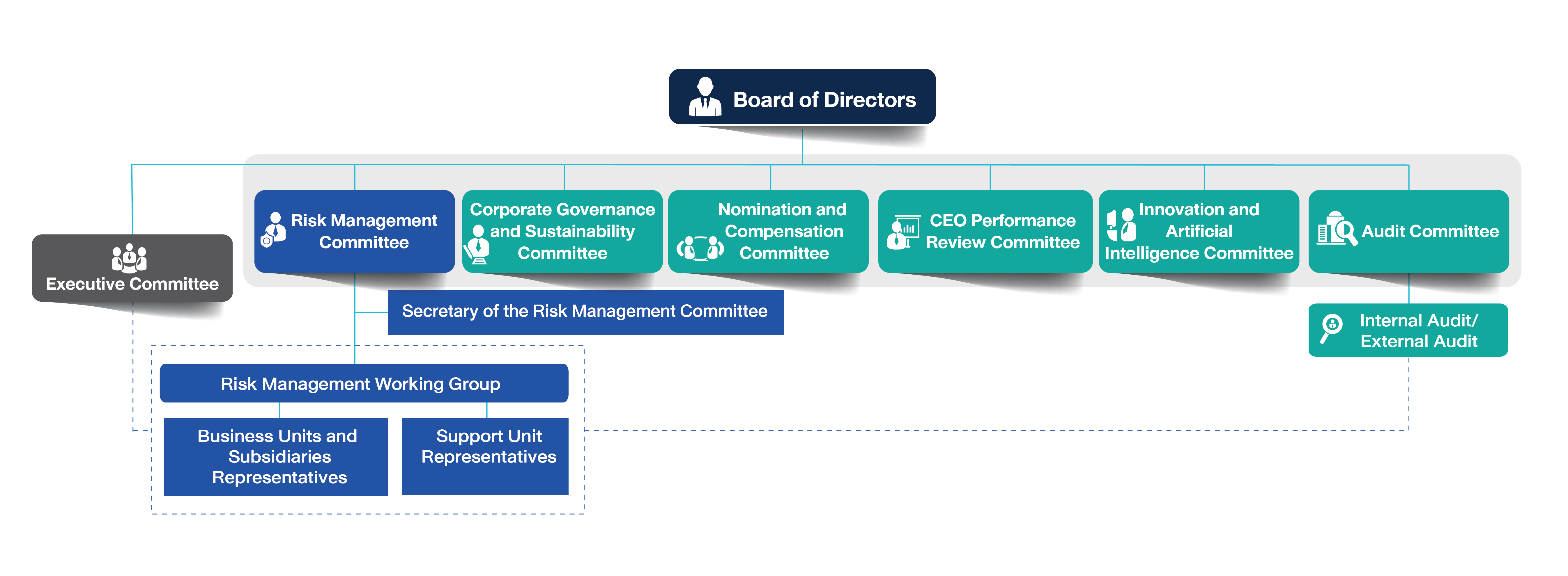
Personnel / Entities | Roles and Responsibilities |
|
|
|
|
|
|
|
|
|
|
|
|
Independent Assurance: To ensure maximum transparency and comply with Good Corporate Governance principles, the Company prioritizes the independence of audit and verification processes, as follows:
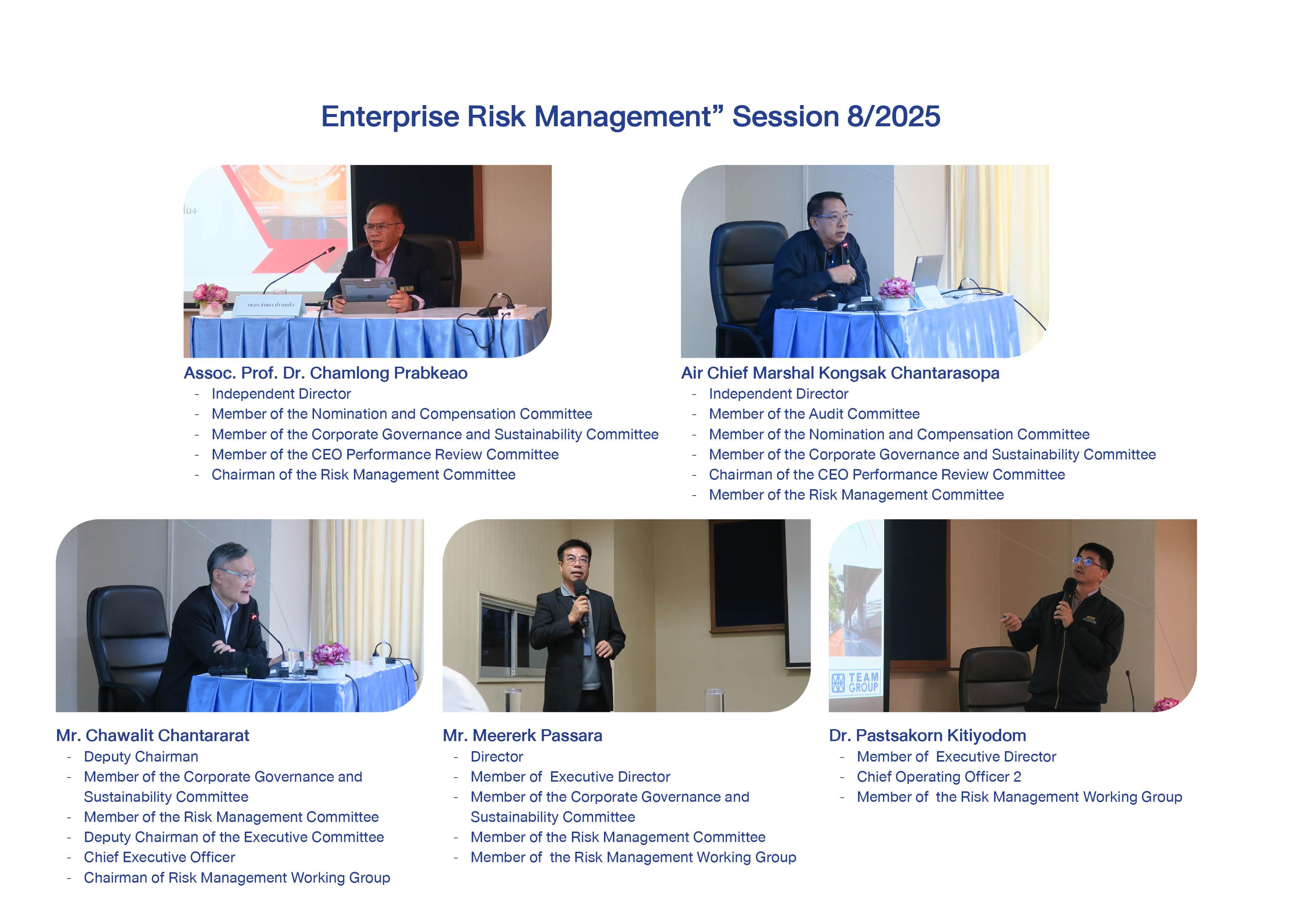
Check and Balance: The Company stipulates that the Chairman of the Risk Management Working Group must be a different person from the Head of Internal Audit to clearly segregate Management responsibilities from Assurance responsibilities. Currently, Independent Director (Assoc. Prof. Dr. Jamnean Prabhakeaw) serves as the Chairman of the Risk Management Committee, and Chief Executive Officer (Mr. Chawalit Chantararat) serves as the Chairman of the Risk Management Working Group.
External Review: Chief Financial Officer (Ms. Natthaya Limsuntrakul) is responsible for coordinating with external audit agencies to perform an External Review of the risk management system. This is conducted to build confidence in operational standards, and the review was successfully completed in February 2025.
Auditor Independence: The Company strictly complies with the regulations of the Office of the Securities and Exchange Commission (SEC) regarding the rotation of auditors every 7 years (or according to current regulations) to ensure independence and fair professional performance standards.
2.1.2 Stakeholder Impact Management
The Company analyzes the correlation between risk management and impacts on six key stakeholder groups:
Stakeholder | Positive Impact (+) | Risk if Mismanaged (-) | TEAMG Risk Mitigation |
Customers | Receiving high-quality, precise engineering and consultancy services with on-time delivery. | Errors in design or reporting and project delays that adversely affect the client’s project budget and costs | Project Risk Management and Quality Management System (ISO 9001:2015) |
Employees | A safe working environment and career stability driven by corporate growth. | Work-related accidents during site visits or employee burnout resulting from ineffective human resource management. | Strict adherence to Occupational Health, Safety, and Working Environment standards, and the cultivation of a Preventive Culture. |
Investors | Financial stability, consistent returns, and sustainable business growth. | Performance failing to meet targets or volatility caused by external factors. | Good Corporate Governance and effective Financial and Cash Flow Risk Management. |
Partners | Fair joint ventures and collaborations, and transparency throughout the supply chain. | Operational disruptions due to partners' failure to meet standards or ethical issues. | Partner assessments (ESG Due Diligence) and strict enforcement of the Supplier Code of Conduct. |
Society | Consultancy and design projects that mitigate environmental impacts and enhance the community's quality of life. | Complaints arising from project operations or damage to local natural resources. | Environmental and Social (E&S) Risk Assessment and expertise in Net Zero / Climate Change. |
Regulators | Transparent business operations that comply with laws and support national development policies. | Legal penalties, fines, or loss of eligibility to participate in government tenders. | Compliance systems and Anti-Corruption policies. |
2.1.4 Risk Management Process
The Company has established a Risk Management Policy to serve as an organization-wide guideline and to reinforce a culture of "Risk Ownership." This process adheres to the international COSO-ERM 2017 framework and the guidelines set by the Stock Exchange of Thailand (SET), emphasizing transparency and sustainable growth. The core process consists of the following 6 steps:
Objective Setting : Establishing goals aligned with the Company’s vision and strategy, covering anti-corruption initiatives and emerging risks, all within the defined Risk Appetite.
Risk Identification : identifying internal and external risk factors across various dimensions, including Strategic, Operational, Financial, Legal/Compliance, and Sustainability (ESG).
Risk Assessment : Analyzing the severity of risks based on Likelihood and Impact to effectively prioritize significant risks.
Risk Response : Determining appropriate management measures, which include: Accept, Reduce, Transfer, or Avoid.
Control Activities : Implementing four types of control activities—Preventive, Detective, Directive, and Corrective to mitigate risks to an acceptable level (Residual Risk).
Monitoring and Reporting : Continuously tracking risk status and reporting performance to the Risk Management Committee on a quarterly basis.
2.1.5 Risk Appetite Statement
The Company has defined its Risk Appetite to serve as a guideline for decision-making and operations, ensuring the achievement of corporate goals under the principles of good governance and sustainability. This considers both positive and negative impacts on all stakeholders. The table below presents TEAMG’s Risk Appetite across various dimensions:
Risk Categories | Risk Appetite | Key Risk Indicator | Consequence of Breach |
| Moderate: Willing to accept risk to pursue new opportunities, provided they are under a controlled plan | Accumulated Contract Amount falling below target by > 10%, or loss of market share in key projects. | Loss of growth opportunities and leadership image in the industry. |
| Low: Focuses on excellence in work quality, cybersecurity, and talent retention. | Customer satisfaction score < 95%, or occurrence of significant IT system failures. | Loss of customer confidence, project cost overruns, and loss of high-potential personnel. |
| Low: Emphasizes cash flow stability and financial liquidity. | Accounts Receivable (AR) > 60 days, or Unbilled Work-in-Progress > 20%. | Lack of liquidity, affecting the confidence of investors and financial institutions. |
| Zero Tolerance: 100% strict adherence to current applicable laws and Business Code of Conduct. | Number of legal violations (e.g., PDPA, labor laws, copyrights), or discovery of corruption or human rights violations. | Severe reputational damage, suspension of eligibility for public/private tenders, and face civil and criminal penalties. |
| Low to Moderate: Focuses on proactive resilience and compliance with emerging regulations. | Greenhouse Gas (GHG) emission levels not meeting the 4% reduction plan, or employees lacking skills in Digital Twin/AI. | Long-term loss of competitiveness and failure to achieve Net Zero targets. |
2.1.6 Business Continuity Management : BCM
The Company has established risk management policies and frameworks in conjunction with Business Continuity Management (BCM) to ensure that operations remain uninterrupted, even during a crisis. The details of these operations are as follows:
Plan Structure : The framework consists of the Emergency Response Plan (ERP)and the Business Continuity Plan (BCP).
Preparedness : The Company conducts annual reviews and plan simulations to enhance its capability to anticipate and respond to Emerging Risks, such as cyber threats and climate change.
2025 Performance : The Company successfully conducted one Business Continuity Plan (BCP)drill to ensure that business operations can resume quickly and efficiently during emergency situations.
2.1.7 Summary of 2025 Achievements and Performance
The Company focuses on cultivating a "Preventive Culture" to ensure that personnel at all levels recognize their duties as "Risk Owners." Key performance highlights are as follows:
1) Risk Culture Promotion
Accountability Mechanism and Remuneration Linkage : Integrated risk management performance and sustainability indicators into the performance appraisal process and executive compensation considerations. This aims to concretely instill awareness and proactive management.
Data-Driven Decision Making : Utilized Key Risk Indicators (KRIs) linked to corporate KPIs to stimulate proactive operations. For example, KRIs are set to monitor contract awards; if they fall below 10% of the plan, Management can adjust marketing strategies in a timely manner.
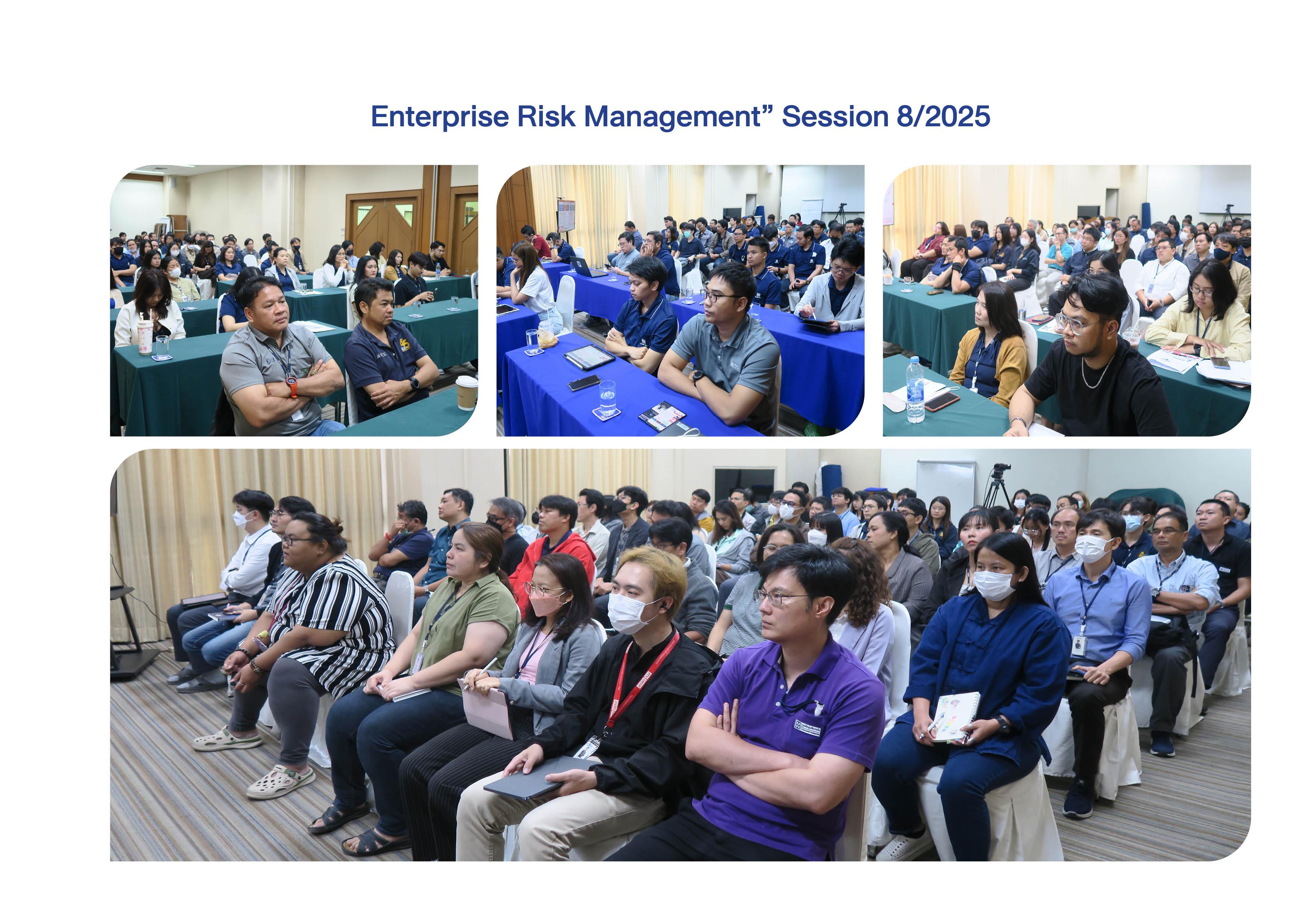
Skills Development and Awareness : Conducted "Enterprise Risk Management" training courses covering ESG dimensions for a total of 11 sessions. There were 885 participants in total (comprising 8 directors, 18 executives, and 859 staff members), representing 68% of the total workforce. This lays the foundation for making risk management an integral part of the workflow for all personnel levels.
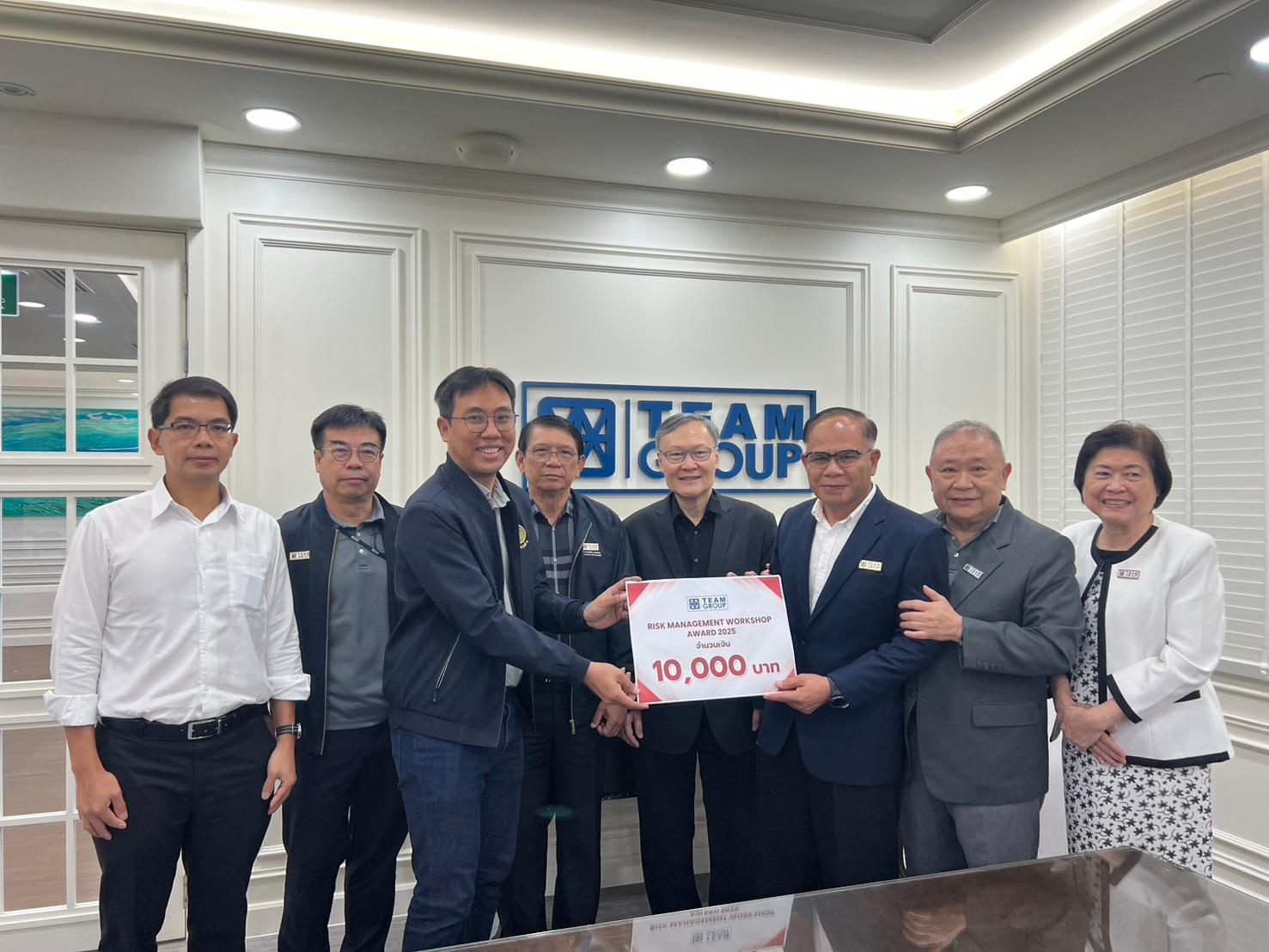
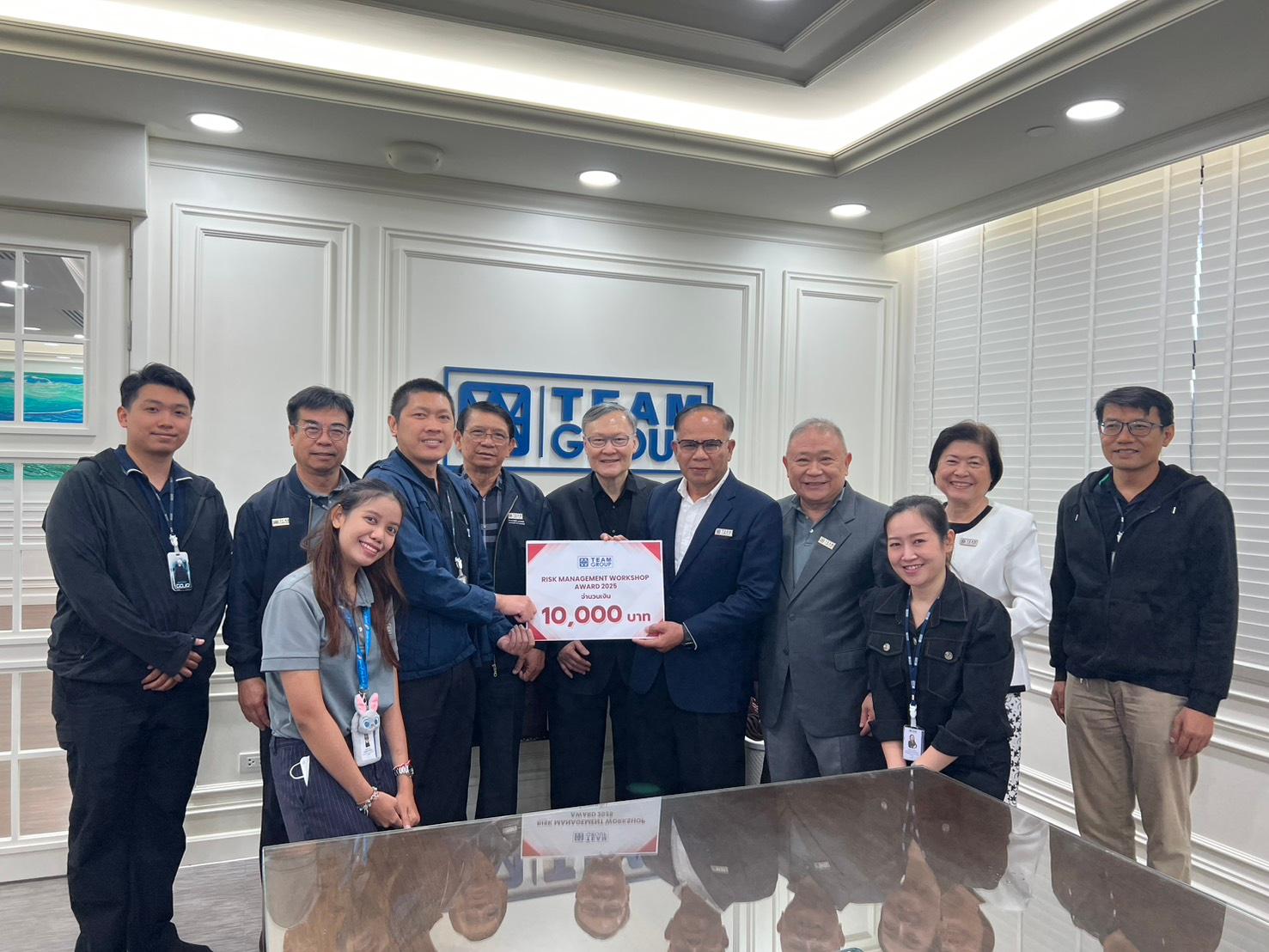
Incentivization : Organized workshops and presented the "Risk Management Workshop Award 2025"to honor exemplary units that demonstrate excellence in practical application.
2) 2025 Risk Management Performance
Based on the monitoring of significant risks (Top Risks), particularly regarding Project Cash Flow (BR2) and Cybersecurity Threats (BR5), the results are as follows:
Control Efficiency : Successfully managed all significant risks within the acceptable Appetite levels, accounting for 100%f all identified items. No incidents exceeded the defined damage thresholds.
Corporate Governance (Zero Tolerance) : No reported incidents of corruption, significant disciplinary actions, or fines related to ESG dimensions. Furthermore, no complaints were received through the Whistleblowing channels.
Sustainable Supply Chain : 100% of significant new partners passed the ESG Risk Assessment and signed the agreement to comply with the Supplier Code of Conduct.
Labor Rights : No significant labor disputes were found, reflecting the efficiency and fairness of the Company’s grievance and remedial mechanisms.
Note: Detailed information regarding key risk factors and their respective mitigation measures can be found in Section 2.2: Risk Factors.
Risk Factors — Overview
Risk Factors — Introduction
The Company operates its business by primarily adhering to its goals, policies, and strategies. A systematic process has been established to identify and assess risk factors on a continuous basis every quarter. This assessment covers both significant internal and external factors to ensure that management measures are determined in alignment with the Risk Appetite defined by the Company
Risks to the Company's Business Operations
Introduction
2.2.1 Current Business Risk Factors
In 2025, the Company conducted a comprehensive analysis of risk factors that could impact corporate sustainability, financial position, and operational performance. This was achieved through tools such as SWOT Analysis and PESTEL Analysis to identify key risk factors shifting with the dynamics of the engineering consultancy industry. Furthermore, the Company prioritized risk management specifically tailored to its Value Chain, ranging from the bidding process to the delivery of high-quality and safe outputs.
Based on the assessment and comparison of risk positions in the Risk Map between target and actual performance, it was found that the majority of risks were controlled within the Green and Yellow zones. These are considered to be within the Acceptable Zone under the Company’s defined Risk Appetite. The details of the Risk Movement Analysis are as follows:
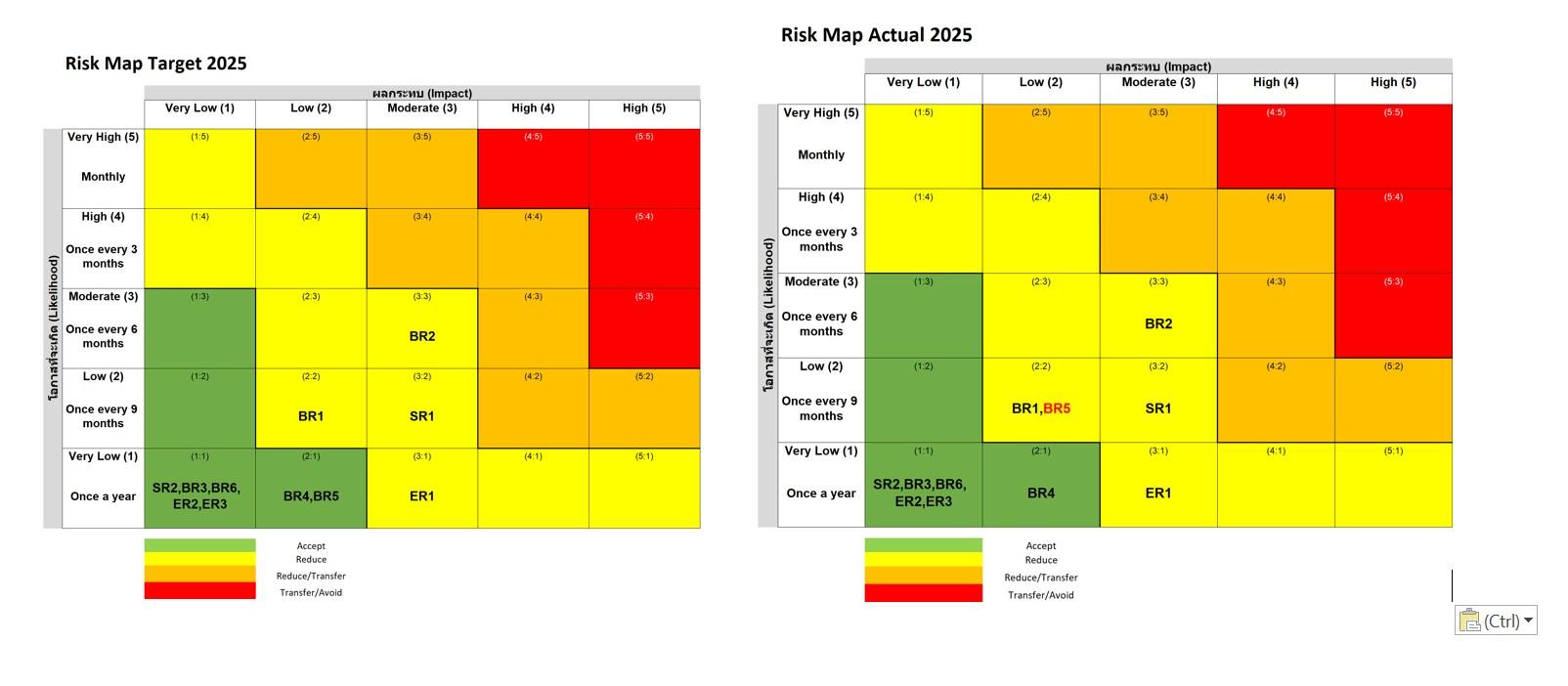
Risk Categories | Code | Key Risk Factors | Risk Appetite (Level) | Risk Movement |
1.Strategic Risk | SR1 SR2 | Strategy misaligned with current situations Risk Damage to corporate image and reputation Risk | Moderate Low | Stable Decreasing |
2.Operational Risk | BR1 BR4 BR5 | Operational management and quality control Risk Human resource management and development Risk Cybersecurity threats Risk | Moderate Low Low | Stable Decreasing Increasing |
3.Financial Risk | BR2 | Project contract and cash flow Risk | Moderate | Decreasing |
4.Compliance Risk | BR3 BR6 | Legal, rules, and regulatory compliance Risk (Focusing on the compliance of operational processes with current laws and regulations) Fraud and Corruption Risk | Low Low | Increasing Stable |
5.Emerging Risk | ER1 ER2 ER3 | Natural Disasters and Climate Change Risk Changes in Government Regulations and ESG Standards) Risk Rapid Technological Transformation Risk | Moderate Low Low | Increasing Increasing Increasing |
Key Movement Analysis:
Positive Internal Trends : Project cash flow risk (BR2) has decreased significantly due to proactive accounts receivable and milestone management, along with maintaining strong relationships with major project clients. This has resulted in a Current Ratio that is stronger than the previous year.
Areas of Vigilance : Cybersecurity risks (BR5) and emerging risks (ER1, ER2, ER3) show an increasing trend, driven by global volatility and rapid technological changes. Consequently, the Company has elevated its surveillance and invested in more secure digital infrastructure to maintain long-term business stability.
Risk Register
| Risk Name | Risk Characteristics | Consequences | Management Measures | Related Risk Factors |
|---|---|---|---|---|
| Strategic Risk : Strategy misaligned with current situations (SR1) | Risk Level: Moderate (Yellow) Risk Description: The risk of corporate direction or strategies being inconsistent with economic conditions, rapid technological innovations, and volatile customer behavior. This includes potential miscalculation of external factors, which may lead to inefficient internal resource allocation. | Inability to adapt to market dynamics will adversely affect competitiveness and lead to missed opportunities for major projects. This could undermine stakeholder confidence and hinder the achievement of long-term sustainable growth targets. | The Company focuses on maintaining its business leadership through proactive strategies and timely responses to changes, as follows:
| 728 · Description: Volatility in the industry in which the company operates · Info category: STRATEGIC_RISK · 730 · Description: Government policy · Info category: STRATEGIC_RISK · 759 · Description: Corporate Governance · Info category: COMPLIANCE_RISK · 732 · Description: Changes in technologies · Info category: STRATEGIC_RISK · 736 · Description: Damage to company image and reputation · Info category: STRATEGIC_RISK · 1714 · Description: Competition risk · Info category: STRATEGIC_RISK |
| Strategic Risk: Damage to corporate image and reputation (SR2) | Risk Level: Low (Green) Risk Description: The risk of losing confidence and trust due to negative incidents affecting the corporate image. This includes potential delays in adapting to government policy shifts towards a low-carbon economy (Net Zero), or the impact of rapid dissemination of negative information via social media. | Potential loss of market share in major projects that prioritize ESG criteria, risk of being restricted from bidding (Blacklisting), or losing opportunities to form international partnerships if the corporate image regarding governance and sustainability is compromised. | The Company focuses on conducting business based on transparency and international quality standards to maintain trust through the following guidelines:
| 759 · Description: Corporate Governance · Info category: COMPLIANCE_RISK · 736 · Description: Damage to company image and reputation · Info category: STRATEGIC_RISK · 746 · Description: Delays in the development of future projects · Info category: OPERATIONAL_RISK |
| Operation Risk : Operational management and quality control Risk : (BR1) | Risk Level: Moderate (Yellow) Risk Description: Technical errors in design or the preparation of complex engineering and environmental project reports. This includes the allocation of personnel whose expertise does not match the specific project requirements, or collaborating with partners who do not meet the Company’s defined quality standards. | Potential Professional Liability, legal claims from clients, and project delivery delays that affect the client’s project costs. These factors could undermine long-term brand credibility and adversely impact the Company's competitive advantage. | The Company focuses on maintaining excellence in service delivery through proactive control mechanisms, as follows:
| 739 · Description: Shortage or reliance on skilled workers · Info category: OPERATIONAL_RISK · 741 · Description: Systems or internal control system · Info category: OPERATIONAL_RISK · 759 · Description: Corporate Governance · Info category: COMPLIANCE_RISK · 746 · Description: Delays in the development of future projects · Info category: OPERATIONAL_RISK |
| Operation Risk : Human resource management and development Risk : (BR4) | Risk Level: Low (Green) Risk Description: The risk of losing specialized personnel (Key Persons), manpower shortages to support business expansion, and the risk of personnel failing to develop skills commensurate with emerging technological changes (Digital Disruption) and industry trends toward sustainability (ESG). This also includes potential burnout resulting from improper human resource management. | Directly affects service quality, project operational continuity, and long-term competitiveness. If personnel cannot apply modern technologies such as AI or BIM, the Company may miss bidding opportunities for projects requiring high technological standards, leading to diminished corporate credibility among clients and international partners. | The Company focuses on proactive human resource management to sustain and develop human capital through the following guidelines:
| 738 · Description: Reliance on employees in key positions · Info category: OPERATIONAL_RISK · 739 · Description: Shortage or reliance on skilled workers · Info category: OPERATIONAL_RISK · 741 · Description: Systems or internal control system · Info category: OPERATIONAL_RISK · 732 · Description: Changes in technologies · Info category: STRATEGIC_RISK · 746 · Description: Delays in the development of future projects · Info category: OPERATIONAL_RISK · 1717 · Description: ESG risk · Info category: STRATEGIC_RISK |
| Operation Risk : Cybersecurity threats Risk : (BR5) | Risk Level: Low (Green) Risk Description: The risk of information system attacks in various forms, such as Ransomware, unauthorized access to steal project trade secrets, or the leakage of personal data belonging to clients and employees. This risk is heightened as the Company utilizes advanced technologies requiring connectivity to complex and large-scale database networks, including BIM, Digital Twin, and AI. | Potential business continuity disruptions, damage to critical project data, and the risk of severe legal penalties or fines under the Personal Data Protection Act (PDPA). Additionally, such incidents could lead to international reputational damage. | The Company has elevated its proactive information security measures to align with international standards, as follows:
| 741 · Description: Systems or internal control system · Info category: OPERATIONAL_RISK · 732 · Description: Changes in technologies · Info category: STRATEGIC_RISK · 744 · Description: Information security and cyber-attack · Info category: OPERATIONAL_RISK · 736 · Description: Damage to company image and reputation · Info category: STRATEGIC_RISK |
| Financial Risk : Project contract and cash flow Risk : (BR2) | Risk Level: Moderate (Yellow) Risk Description : The risk of payment delays or payments not meeting the planned schedule, as revenue recognition depends on contractually defined milestones and construction progress. This includes risks from the Extension of Time (EOT) without the ability to charge additional service fees, resulting in an excessively high proportion of Unbilled Receivables. | If the Unbilled Receivables ratio exceeds 20% of total revenue, it will directly impact the Group’s working capital and liquidity. This affects debt-servicing ability and increases interest expenses if borrowing is required to fund project operations. Furthermore, it undermines the confidence of investors and financial institutions and leads to missed opportunities in bidding for new high-potential projects due to cash flow constraints | The Company emphasizes maintaining financial discipline and proactive cash flow management to ensure business stability, as follows:
| 1724 · Description: Liquidity risk · Info category: FINANCIAL_RISK · 745 · Description: Loss or damage from non-compliance of partners or counterparties · Info category: OPERATIONAL_RISK · 746 · Description: Delays in the development of future projects · Info category: OPERATIONAL_RISK |
| Compliance Risk :Legal, rules, and regulatory compliance Risk: (BR3) (Focusing on the compliance of operational processes with current laws and regulations) | Risk Level: Low (Green) Risk Description : The risk of failing to comply with existing laws and applicable regulations. This encompasses the Personal Data Protection Act (PDPA), software copyright and intellectual property laws, labor laws, and increasingly complex consultancy contract requirements based on public and private procurement standards. | Non-compliance may lead to civil litigation, criminal penalties, and blacklisting from project bidding. Additionally, it could result in the revocation of professional licenses, directly impacting the Company's reputation, stakeholder confidence, and future business opportunities | The Company focuses on enhancing regulatory resilience to remain current with evolving legal landscapes through the following guidelines:
| 756 · Description: Change in laws and regulations · Info category: COMPLIANCE_RISK · 730 · Description: Government policy · Info category: STRATEGIC_RISK · 758 · Description: Violations of laws and regulations · Info category: COMPLIANCE_RISK · 759 · Description: Corporate Governance · Info category: COMPLIANCE_RISK |
| Compliance Risk : Fraud and Corruption Risk : (BR6) | Risk Level: Low (Green) Risk Description: The risk of fraud or actions that violate the Business Code of Conduct during bidding processes, procurement, or coordination with external agencies in both the public and private sectors. This may involve bribery to influence decisions or a lack of transparency within the supply chain, given the Company's extensive and complex scope of operations. | If corruption occurs, it will trigger a severe chain reaction, ranging from restricted bidding rights or being blacklisted by contracting agencies—leading to a loss of major project revenue—to facing criminal litigation and heavy fines. Furthermore, it undermines investor confidence and governance ratings such as FTSE Russell. These damages threaten financial stability and pose a significant obstacle to long-term sustainable growth. | The Company is committed to an anti-corruption policy in all forms and implements proactive measures to ensure transparency, as follows:
Robust Whistleblowing System : Providing secure and highly confidential whistleblowing channels, independently overseen and monitored by the Risk Management Committee to ensure fairness and transparency at every stage. | 759 · Description: Corporate Governance · Info category: COMPLIANCE_RISK · 1724 · Description: Liquidity risk · Info category: FINANCIAL_RISK · 736 · Description: Damage to company image and reputation · Info category: STRATEGIC_RISK |
| Emerging risk : Natural Disasters and Climate Change Risk :(ER1) | Risk Level: Moderate (Yellow) Risk Description: Climate change risks impacting two main dimensions: 1) Physical Risk from the increased severity and frequency of natural disasters that may affect the Company’s assets and project operations; and 2) Transition Risk, covering changes in policies, regulations (such as the CBAM measure), low-carbon technologies, and fluctuations in market demand within the engineering consultancy industry. | Inability to timely adapt to climate change may lead to higher financial costs across the Value Chain. This includes professional liability risks if designs do not account for changing climatic conditions, directly affecting competitiveness in a low-carbon economy and potentially undermining the confidence of investors who prioritize Environmental (E) factors. | The Company integrates climate management into its sustainable corporate strategy as follows:
| 756 · Description: Change in laws and regulations · Info category: COMPLIANCE_RISK · 746 · Description: Delays in the development of future projects · Info category: OPERATIONAL_RISK · 750 · Description: Climate change and disasters · Info category: OPERATIONAL_RISK · 1717 · Description: ESG risk · Info category: STRATEGIC_RISK |
| Emerging risk : Changes in Government Regulations and ESG Standards Risk : (ER2) | Risk Level: Low (Green) (Due to the Company’s proactive preparedness measures) Risk Description: The risk arising from the escalation of stringent and complex ESG regulations and standards at both national and international levels. Key examples include the Thailand Taxonomy and the European Union’s Carbon Border Adjustment Mechanism (CBAM). These measures are increasingly being used as critical criteria for consultant selection in large-scale projects. | Failure to elevate expertise in alignment with these new criteria may result in a Loss of Business Opportunities, a decline in sustainability ratings, and restricted access to Green Finance sources. | The Company focuses on transforming regulatory requirements into competitive advantages as follows:
| 756 · Description: Change in laws and regulations · Info category: COMPLIANCE_RISK · 730 · Description: Government policy · Info category: STRATEGIC_RISK · 759 · Description: Corporate Governance · Info category: COMPLIANCE_RISK · 1717 · Description: ESG risk · Info category: STRATEGIC_RISK |
| Emerging risk :Rapid Technological Transformation Risk : (ER3) | Risk Level: Low (Green) Risk Description: The risk arising from the exponential leap in emerging technologies (Digital Disruption), such as Artificial Intelligence (AI), Digital Twin technology, and Big Data management for large-scale projects. If the Company fails to adapt or integrate these innovations into its workflows in a timely manner, traditional processes will become inefficient compared to the new global standards of the engineering consultancy industry. | Delayed adaptation directly affects competitiveness and leads to the loss of a client base seeking high-tech solutions. Furthermore, it may result in higher operating costs than competitors due to a lack of automation-driven efficiency. This also impacts investor confidence regarding long-term growth potential and carries the risk of losing high-potential personnel if the organization lacks modern digital tools to support their work. | The Company focuses on a comprehensive digital transformation to elevate service standards and create new business opportunities as follows:
| 741 · Description: Systems or internal control system · Info category: OPERATIONAL_RISK · 732 · Description: Changes in technologies · Info category: STRATEGIC_RISK · 1717 · Description: ESG risk · Info category: STRATEGIC_RISK |